What to Look for When Buying a Vintage Pocket Watch
Every collector who has stood at an estate sale table, holding a century-old timepiece and wondering whether it is a genuine heirloom or a cleverly assembled "frankenwatch," understands the distinct unease of the moment. The stakes feel different with a treasured timepiece. They carry deep meaning. You are not just buying a gear-filled mechanism; you are taking on the responsibility of preserving a vessel for memories that has already outlived several generations of owners. At our family workshop, where we have served as trusted guardians of horological history since 1917, we have guided countless collectors through this journey. We want to share the earned insight needed to evaluate movement quality, assess physical condition, verify authenticity, and know when to seek the counsel of a master horologist before committing to a purchase.
What to Look for in a Vintage Pocket Watch: The Essential Evaluation Framework
To safely buy a vintage timepiece, evaluate four core areas: the manufacturer's reputation, the movement quality, the physical condition of the case and dial, and the mechanical functionality. Prioritize timepieces with documented restoration history, original matching serial numbers, and minimal signs of aggressive cosmetic polishing to preserve their historical integrity.
Collecting antique timepieces carries a poignant weight that most other collecting pursuits do not. They hold stories. These objects have rested in waistcoat pockets during railway journeys, sat on bedside tables through decades of family life, and passed between hands at moments of inheritance and loss. Approaching a purchase with that awareness, treating yourself as a steward rather than a consumer, changes what you look for and how carefully you look. A collectible pocket watch earns its value through historical rarity, documented provenance, and the integrity of its original components, while an everyday-wear piece prioritizes mechanical reliability and serviceability over period accuracy. Understanding which category you are buying into before you attend an estate sale or browse an antique market is the first, often overlooked, step in this journey.
The pragmatic checklist that follows from that distinction is clear, even if executing it requires patience. You want to know who made the movement, when, and whether the parts in front of you truly belong together. You want to understand the condition of the case, the dial, and the crystal without being misled by a fresh polish or replaced glass. And you want some sense of whether the mechanism still functions, or whether it will require significant restoration before its heartbeat returns. None of these questions have quick answers, but each one has a reliable method.
Evaluating Vintage Watch Condition and Movement Quality
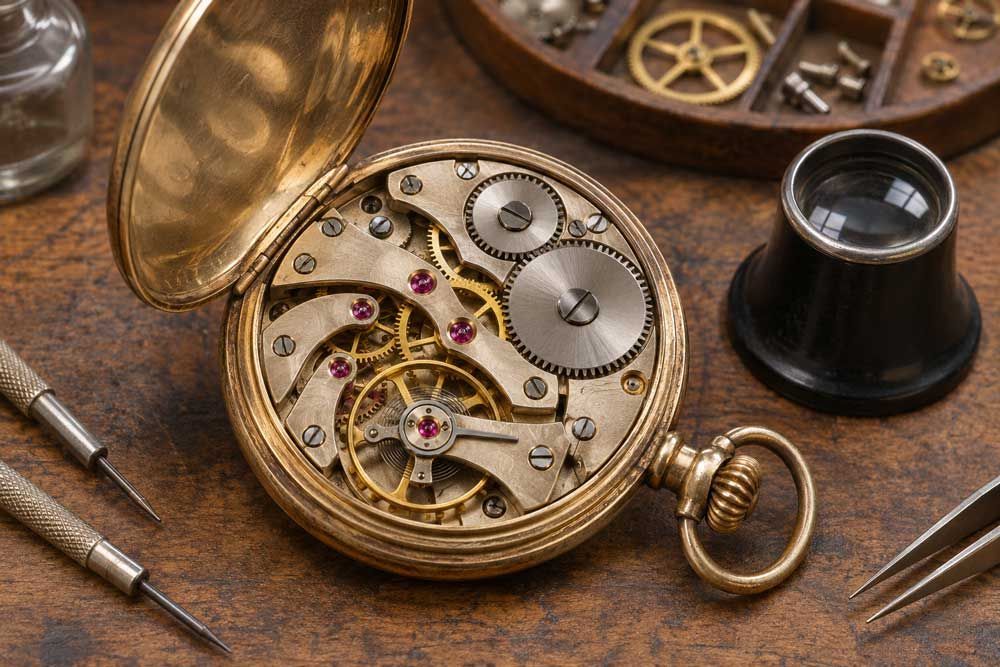
Evaluating vintage pocket watch movement quality requires inspecting the gear train, balance wheel, and escapement for wear, corrosion, or unoriginal work. A high-quality movement features clean plates, intact jewels, and matching serial numbers on both the movement and the case, indicating the timepiece has remained historically complete.
The movement is the soul of the timepiece, where a centuries-old dance of gears is hidden beneath the metal. Think of it the way you would think of a cherished family photograph: the image itself may look fine at a glance, but the paper it is printed on, the condition of the emulsion, and the way it has been stored over decades tell the deeper story of whether it will survive another generation. A pocket watch movement that has been carelessly handled, poorly serviced, or left to sit in a damp drawer for thirty years may look presentable through the case back glass, but the evidence of that neglect will be written into its plates, wheels, and jewels. Rust on the steel winding wheels, scratched brass plates from a clumsy past repair, and green verdigris on brass components are the most common signs of a movement that has been compromised. Any one of them warrants serious scrutiny before purchase. Look closely.
The diagnostic checklist below covers the core inspection points for evaluating a movement you can see but not yet disassemble:
- Serial Number Verification: Locate the serial number engraved on the movement plates, which are typically visible through the open case back, and cross-reference it against the manufacturer's production records. This confirms the production year and, crucially, whether the movement matches the case it currently lives in.
- Jewel Count and Quality: Jewels, which are synthetic rubies or sapphires used as precision bearings at high-friction pivot points, reduce wear and signal a higher-grade movement. A 17-jewel movement represents a solid standard; 21 jewels or more typically indicates railroad-grade precision engineering.
- Signs of Wear and Past Repairs: Beyond rust and corrosion, look for scratched plates, which are a telltale sign of a screwdriver that slipped during a past service. Stripped screw heads and mismatched screws suggest unskilled work.
- Historical Watchmaker Marks: Tiny hand-scratched initials or dates inside the case back indicate a history of professional maintenance. These marks are a quiet form of provenance, and their presence is generally a good sign.
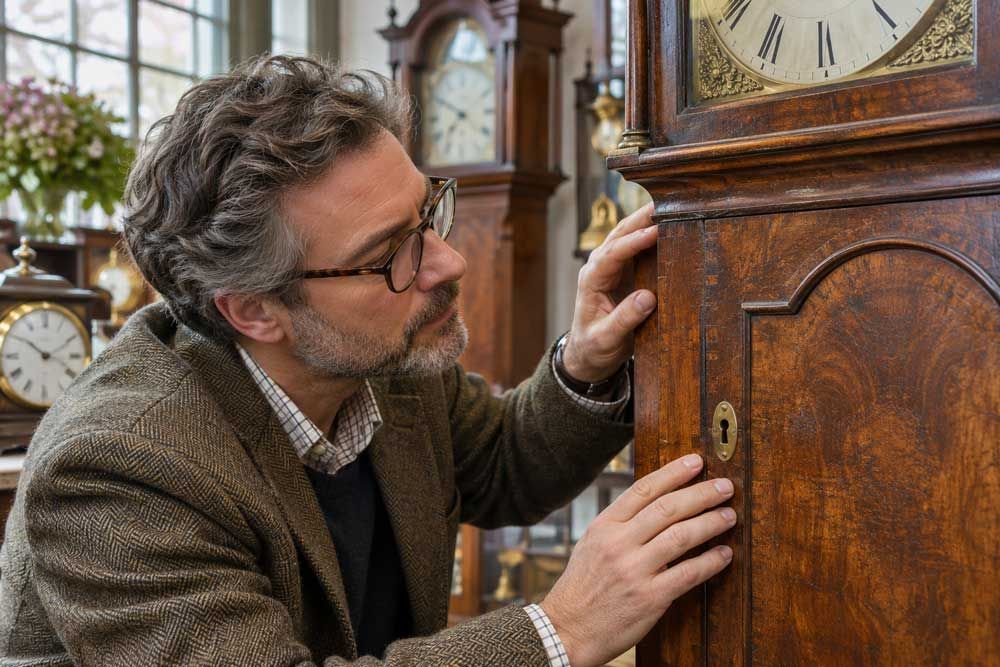
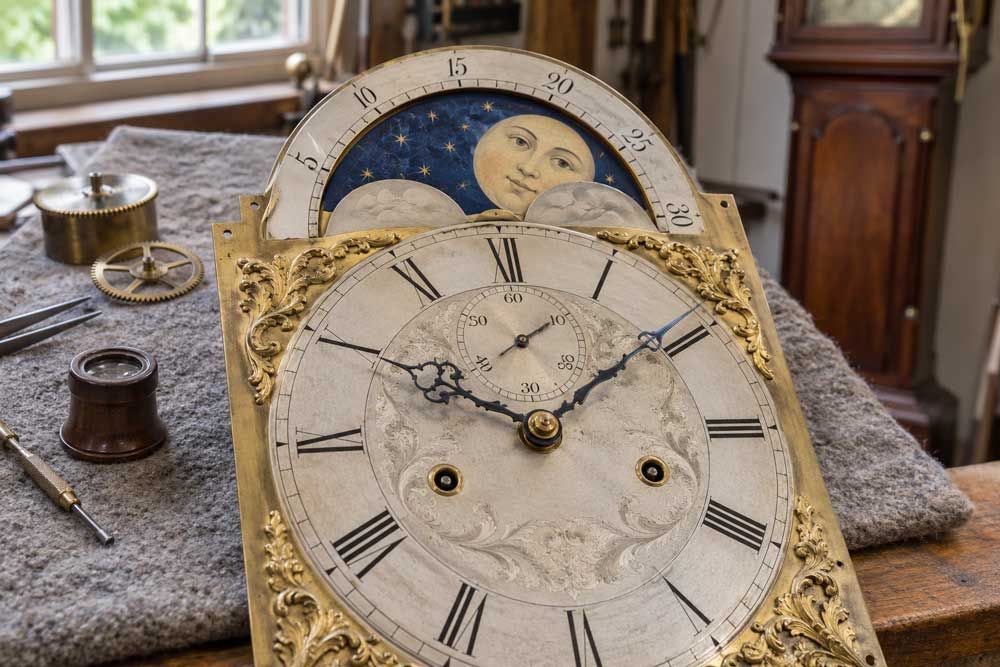
While a meticulous visual inspection through the case back reveals a great deal, the internal mechanical health of a vintage movement, including mainspring fatigue, pivot wear, and the state of dried lubricants, requires professional hands and proper tools to assess accurately. Our master horologists at Chicago Clock Company approach vintage watch restoration with a preservation-first philosophy, using historically accurate parts and meticulous technique to ensure that a timepiece's integrity remains intact through every service. If you are evaluating a substantial acquisition, bringing it in for an expert assessment before finalizing the transaction is a prudent way to protect your investment.
Navigating Pocket Watch Manufacturer Reputation and Historical Significance
The historical significance of these timepieces is deeply tied to prestigious manufacturers who pioneered industrial precision. When buying, focus on historic American and Swiss brands known for their engineering standards, as their widespread production ensures that original replacement parts remain available for future restoration.
The railroad era gave American watchmaking its singular purpose. Lives depended on it. When split-second accuracy became a matter of life and death on shared rail lines, manufacturers responded by engineering movements to tolerances that were extraordinary for their time. Railroad-grade standards, typically requiring 21 jewels, lever-setting (a mechanism that prevents accidental time changes), adjustment to five or more positions, and a specified rate accuracy, represent the pinnacle of what American pocket watch manufacturing achieved. A movement meeting those standards is not merely a collectible curiosity; it is evidence of a specific industrial moment when precision engineering was treated as a moral obligation.
The Chicago area and wider Illinois sit at the center of that history in ways that matter to collectors browsing local estate sales and antique markets. The proximity of major regional manufacturers and the density of railroad commerce through the Midwest means that genuine, high-grade American movements surface here with some regularity, but so do assembled pieces that mix and match components from different eras and makers. Buyers who understand pocket watch manufacturer reputation can distinguish between a movement that commands collector interest and one that has been assembled from spare parts.
When evaluating specific pieces, three additional factors deserve focused scrutiny:
- Case Material and Patina: Solid gold, gold-filled, and silverode cases age differently and carry different values. Original, unpolished patina, which is the gentle darkening and softening of metal surfaces over decades, is highly prized by serious collectors. A case that has been aggressively polished loses the sharp engraving edges and surface character that confirm its age, and that loss is irreversible.
- Dial Authenticity: Enamel dials from the late nineteenth and early twentieth centuries are fragile. Hairline cracks are common and, in modest form, acceptable to many collectors. What matters more is whether the dial is original to the movement: refinished or replaced dials dramatically reduce collector value, and the difference between an original and a reproduction is often visible under magnification.
- Hand Accuracy: Confirm that the hands match the historical era of the movement. Mismatched hands are one of the more common signs of a timepiece that has been assembled from non-original parts.
"A mechanical timepiece is not unlike a well-tended garden: it rewards patience and regular, attentive care with decades of faithful service. When we preserve these instruments, we are not merely restoring mechanisms; we are keeping the steady heartbeat of family history alive."
How to Check Vintage Watch Authenticity and Avoid Common Pitfalls
To check vintage timepiece authenticity, verify that the brand on the dial matches the signature on the movement, and ensure the case style is historically accurate to the movement's production date. Watch out for "frankenwatches" that combine mismatched parts from different eras, which severely reduces collector value.
A frankenwatch, which is the collector's term for a timepiece assembled from non-matching components, is the most frequent pitfall in the vintage pocket watch market, and it is not always obvious at first glance. The dial may carry a prestigious name, the case may look period-appropriate, and the movement may run. Do not be fooled. But if those three elements do not belong together, the piece has little collector value and may present restoration challenges that a genuinely original timepiece would not. The verification process starts with a simple cross-check: does the brand name on the dial match the signature engraved on the movement plates? Does the case style, including its shape, material, and construction, align with what that manufacturer was producing during the movement's production years? A mismatch in any of these does not automatically disqualify a purchase, but it should recalibrate your expectations about value and provenance.
A basic vintage pocket watch functionality test you can perform on-the-spot adds another layer of confidence. Wind the crown with care, feeling for smooth, even resistance: a grinding sensation or sudden looseness suggests mainspring or winding mechanism issues. Listen for a crisp, steady heartbeat; an irregular or labored beat often points to a balance wheel problem or dried lubricants creating friction. Test the hand-setting mechanism by pulling the crown to the setting position and turning it slowly. The hands should move cleanly without slipping or sticking. None of these tests replace a professional inspection, but they can quickly reveal a timepiece that has significant mechanical problems before you have committed to a price.
For collectors who love the aesthetic and emotional resonance of a pocket timepiece but prefer the peace of mind that comes with modern engineering, there is a rewarding middle path. The Bulova 150th Anniversary pocket watch pairs a distinctive Art Deco-inspired silver-tone design with a self-winding Swiss mechanical movement and the assurance of a modern manufacturer's warranty. It carries the visual language of a classic timepiece without the fragility and maintenance demands of a century-old antique, offering an ideal choice for someone who wants to carry the tradition daily rather than preserve it in a display.
The Critical Role of Professional Inspection for Antique Watches
A professional inspection for antique timepieces is the only definitive way to identify hidden mechanical issues like gear train wear, mainspring fatigue, or dried lubricants. An experienced craftsman can safely open the case back, run diagnostic tests, and provide an accurate restoration estimate before you finalize a purchase.
What a trained horologist sees when they open a vintage movement goes well beyond what any visual inspection through the case back can reveal:
- Mainspring Fatigue: A mainspring that has taken a permanent set, meaning it no longer uncoils with consistent tension, will prevent the timepiece from holding a full power reserve. A cracked mainspring is a more serious problem and can cause sudden, catastrophic failure inside the movement if the timepiece is wound.
- Gear Train Alignment: The delicate wheels and pivots that carry power from the mainspring to the escapement wear at their contact points over decades. Microscopic pivot wear or a previous low-quality repair that bent a wheel tooth slightly can cause intermittent stopping that is nearly impossible to diagnose without disassembly.
- Lubrication State: Watch oils from even a relatively recent service dry out and eventually congeal into an abrasive paste. Running a vintage movement with degraded lubrication accelerates wear on every friction surface; the damage compounds quietly until something fails.
There is a pragmatic case for local, in-person inspection that goes beyond the technical. Shipping is risky. Shipping a delicate, potentially valuable vintage timepiece through a national carrier introduces risk that simply does not exist when you carry it in by hand. Vibration, temperature changes, and the rough handling that parcels receive in transit can disturb a fragile movement or damage an enamel dial. Bringing a potential acquisition directly to a physical workshop means you receive immediate, face-to-face feedback from craftsmen who can hold the piece, examine it under proper magnification, and give you an honest assessment on the spot, leaving no room for waiting, shipping anxiety, or ambiguity about what you are dealing with.
Frequently Asked Questions About Buying Vintage Pocket Watches
How often does a vintage pocket watch need maintenance?
To preserve its mechanical integrity, a vintage pocket watch should be professionally maintained every three to five years. This custodianship involves completely dismantling the movement, cleaning the components, applying fresh horological oils, and regulating the balance wheel to ensure accurate timekeeping.
Can I wear a vintage pocket watch as an everyday timepiece?
While some sturdy models can handle careful daily wear, most antique timepieces lack modern shock absorption and water resistance. They are best reserved for special occasions or displayed as cherished historical objects to prevent accidental damage from moisture, dust, or impacts.
What is the difference between a lever-set and a pendant-set pocket watch?
A pendant-set timepiece allows you to set the time by pulling the crown outward. A lever-set timepiece, designed primarily for railroad safety, requires unscrewing the front bezel and pulling out a small metal lever near the dial to adjust the hands, preventing accidental time changes.
How do I safely clean the exterior of my vintage pocket watch?
Use only a clean, dry microfiber cloth to carefully wipe the case and crystal. Never use liquid cleaners, chemical polishes, or water, as moisture can easily penetrate the unsealed cases of vintage timepieces and cause catastrophic rust on the delicate steel movement parts.
Why is original patina so important to pocket watch collectors?
Patina represents the natural aging process of metals and dials over decades. Aggressive polishing or dial refinishing removes this historical character, often reducing the collector value of the timepiece by more than half. True preservation honors the timepiece's lived history.
A vintage pocket watch that has survived a century or more deserves the same measured attention you would give to any object of genuine historical weight. The evaluation process outlined here, which works through manufacturer reputation, movement condition, physical integrity, and mechanical function, will not guarantee a perfect purchase every time, because the vintage market is complex and not every question has a clean answer. What it will do is give you the knowledge to ask the right questions, recognize the warning signs, and understand what you are committing to before the money changes hands.
At Chicago Clock Company, we have spent four generations, spanning more than a century since our founding in 1917, caring for exactly these kinds of timepieces, and we treat every piece that comes through our doors with the same unhurried reverence its history deserves. In an era where we must take a break from the throw-away mentality, a treasured timepiece is not just a tool for telling time. It is a tangible thread connecting you to the people who carried it before, and the generations who may carry it after. It connects generations. Take your time choosing it well.
Bring Your Timepiece to Chicago Clock Company
If you have found a promising acquisition at an estate sale, inherited a cherished family heirloom, or simply want a professional opinion before committing to a purchase, our family of master horologists, Jason Matthiesen, Louie Matthiesen, and Conrad Utecht, is ready to help.
Walk in with no appointment needed for a free, while-you-wait diagnostic evaluation at any of our three Chicagoland locations: our main showroom at 431 Ogden Avenue (630 986 9210), our Orland Park workshop at 14486 LaGrange Road (708-349-2565, Monday to Friday 10 am to 6 pm, Saturday 10 am to 5 pm), or our Palatine location at 1615 North Rand Road (847-359-5805, Monday to Friday 10 am to 6 pm, Saturday 10 am to 5 pm).
Our watch repair services in Chicago are built on the same preservation-first philosophy we have carried since our founding: careful, expert custodianship that keeps the stories inside these timepieces ticking for generations to come.