Best Wall Clocks Under $300: A Buying Guide
A wall timepiece is more than a tool for tracking hours; it is often the very heartbeat of your home. It anchors the room. When choosing a timepiece under $300, the decision is not just about home decor; it is about finding an instrument built to last for generations. This guide compares movement types, heritage brands, and design considerations so you can select a timepiece that becomes a genuine part of your family's story.
The Value of a Quality Timepiece Under $300
The $300 ceiling is a meaningful threshold in the wall timepiece market. Below it, you will find a wide spectrum of options ranging from flimsy plastic shells with generic movements to grain-matched wood cases, brushed metals, and protective glass crystals that are built to outlast the room they hang in. The difference between those two categories is not subtle: it shows up in how the case ages, how the heartbeat of the timepiece performs over years of continuous use, and whether the timepiece becomes a family heirloom or ends up in a donation bin after three years.
Heritage brands like Howard Miller, Bulova, Seiko, and Rhythm all offer models within this range that share construction standards with their higher-priced lines. Real wood cases, such as oak, cherry, and mahogany, are finished with the same attention to grain direction and proportion you would find on pieces valued at twice as much. Glass crystals protect the dial from scratches and UV discoloration in ways that acrylic simply cannot sustain over a decade of exposure. These are not premium features reserved for expensive timepieces; they are the baseline of what a well-made timepiece looks like.
A wall timepiece also occupies a different category from most home furnishings. It holds a fixed visual position in a room and draws the eye repeatedly throughout the day, every day. A poorly proportioned or low-grade piece announces itself constantly in a way that a poorly chosen throw pillow never would. A well-chosen timepiece, by contrast, recedes into the room's character and reinforces it. It feels natural. Choosing carefully in the under-$300 range is not about spending more than necessary: it is about avoiding the low-grade friction of a piece that never quite belongs.
At Chicago Clock Company, our family has been helping homeowners preserve the memory of their most cherished spaces since 1917, bringing four generations of care to local homes. The timepieces we carry in this investment tier are selected because they bridge the gap between disposable decor and an investment in legacy, offering lasting value without requiring an extraordinary outlay.
Understanding Wall Clock Movements: Quartz vs. Atomic
The heartbeat of the timepiece determines how it keeps time, how much maintenance it demands, and how it sounds in a quiet room. Understanding the distinctions between standard quartz, atomic, and sweep movements is the most practical starting point for any buying decision in this category. Each has distinct advantages.
Standard quartz heartbeats use a battery-powered synthetic crystal that oscillates at a precise frequency to regulate timekeeping. The consistency of that oscillation is what makes quartz so dependable; the movement does not drift meaningfully under normal temperature and humidity conditions. Battery efficiency varies by manufacturer and movement design, so battery life is not a fixed number across all quartz timepieces, but reputable manufacturers engineer their movements to minimize current draw. A quality quartz movement from a brand like Seiko or UTS will hold accurate time with minimal intervention for years.
Atomic heartbeats take a fundamentally different approach. Rather than relying solely on the crystal's oscillation, they synchronize daily via radio signals broadcast by the National Institute of Standards and Technology's transmitter in Fort Collins, Colorado. That signal carries the official U.S. time, and the clock's receiver adjusts accordingly, including automatic corrections for daylight saving time. For households where precision matters and manual time adjustments are a recurring nuisance, atomic heartbeats eliminate the problem entirely. There is also a case to be made that atomic timepieces are the more practical choice for households with multiple timepieces, since every piece stays synchronized without any manual intervention.
The Howard Miller Mill Shop wall timepiece illustrates what quartz reliability looks like in an industrial-style case: clean lines, durable construction, and a movement that simply runs without demanding attention. For a more traditional expression of the same quartz dependability, the Bulova Holyoke Clock B1881 pairs a classic wooden case with a precise quartz heartbeat, demonstrating that heritage styling and modern accuracy coexist comfortably in this investment tier.
Sound profile is a separate consideration that matters more than most buyers anticipate until they have lived with a timepiece in a quiet space. Three heartbeat types handle this differently:
- Traditional Stepping Quartz: The second hand advances in discrete one-second increments, producing the classic tick-tock sound. Specific decibel measurements vary by heartbeat and case design and are not available from verified sources, but the sound is audible in a quiet room and can become noticeable in low-ambient-noise environments.
- Silent Sweep Quartz: The second hand moves in a continuous, fluid arc rather than stepping, eliminating the ticking sound entirely. This is the preferred choice for bedrooms, home offices, and libraries where ambient noise is minimal.
- Radio-Controlled Quiet Heartbeats: These combine atomic-level accuracy with whisper-quiet gear trains, offering the best of both precision and silence for spaces where both matter.
- For those seeking exceptional silent-sweep options, shop Seiko timepieces to find the right match for your space, or explore modern floor timepieces if you want to make a grander statement in a larger room.
Top Heritage Brands for Mid-Range Wall Clocks
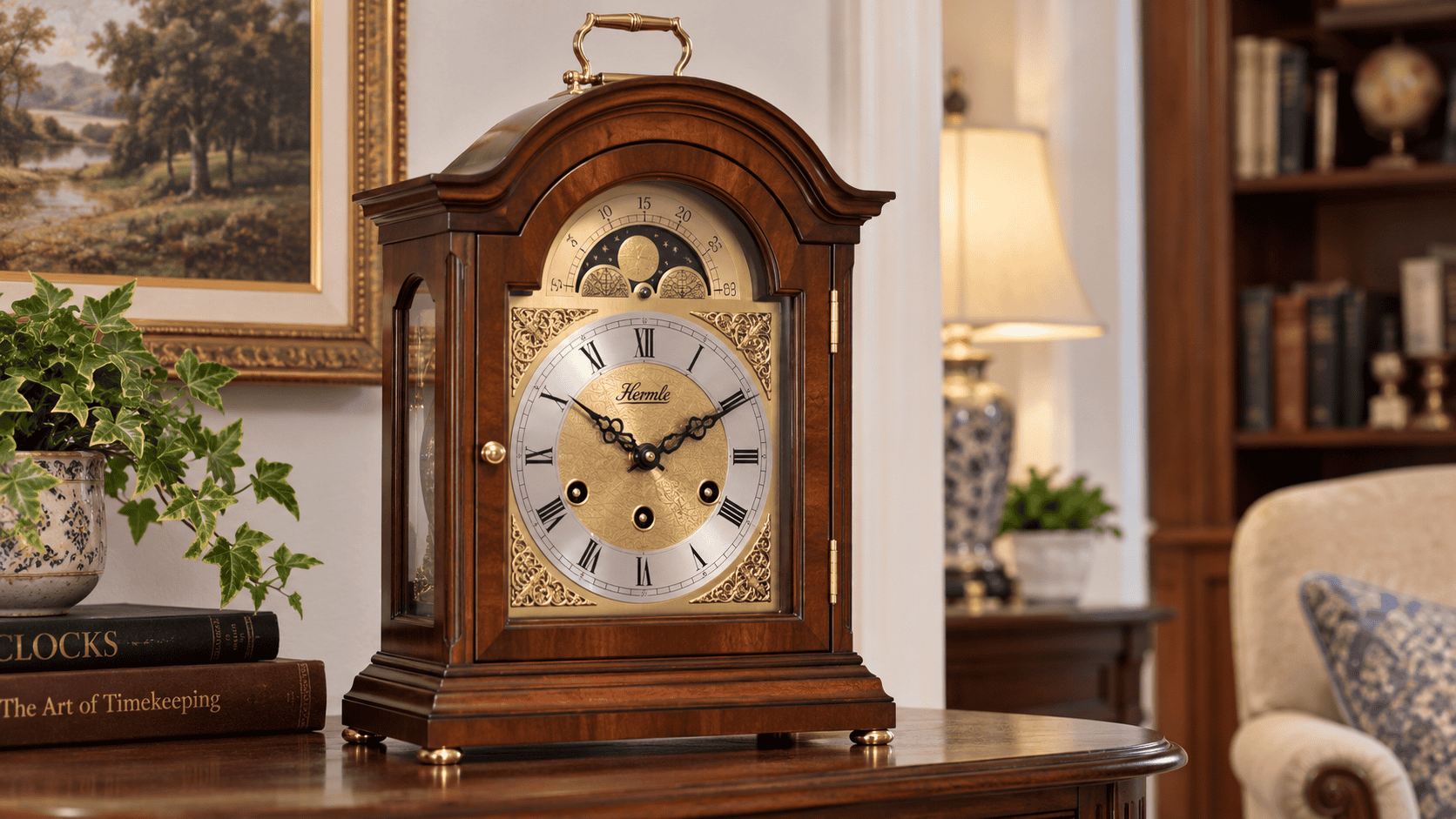
Howard Miller and Bulova occupy a particular position in the American market; both have long manufacturing histories, and both carry their design discipline into mid-range lines rather than reserving it for premium tiers. Howard Miller's wall timepieces under $300 consistently feature solid wood cases with grain-matched veneers, polished brass bezels, and proportions drawn from traditional American and European horology. The cases are constructed to age gracefully; the finishes do not peel or mottle the way painted MDF alternatives do after a few years of temperature cycling in a living room.
Bulova approaches the same investment tier with slightly more variation in dial layout and case geometry. Their mid-range selections often blend traditional wood construction with cleaner, more contemporary dial arrangements, which is a useful middle ground for rooms that are not strictly traditional but still want warmth and material quality. The glass crystals on Bulova's wooden models are worth noting specifically: real glass resists the micro-scratching that accumulates on acrylic covers over years of routine dusting, and it does not develop the yellowing haze that acrylic is prone to under prolonged UV exposure. That distinction matters more at year five than it does at purchase. It is about longevity.
Seiko and Rhythm bring a different set of strengths to this price tier. Seiko's reputation in the silent sweep category is well-established; their heartbeats are engineered for continuous-motion accuracy, and their dials tend toward uncluttered, architecturally clean designs that integrate naturally into contemporary and transitional interiors. Rhythm's specialty is more theatrical: their musical and motion features are categorically different from anything else in this investment tier, with high-fidelity chimes that play melodies on the hour and, in select models, animated figures that move with the music. For a family room or an entryway where a timepiece can function as a conversation piece rather than just a functional object, Rhythm offers something no other brand at this investment tier quite replicates.
A practical framework for matching brand to use case:
- For classic wood and brass that suits traditional decor, Howard Miller and Bulova are the natural starting points.
- For whisper-quiet operation in bedrooms or home offices, Seiko's silent sweep models are the most reliable choice.
- For musical artistry and motion displays in family spaces, Rhythm stands apart from the rest of the field.
How to Choose the Perfect Wall Clock for Your Home Decor
Scale is the variable most buyers miscalibrate. A timepiece that looks appropriately sized in a product photograph can read as undersized on a large wall, or visually oppressive above a narrow console table. The general guidance that a timepiece's diameter should occupy roughly two-thirds of the wall width it hangs on is a useful starting point, but the actual proportions depend on ceiling height, surrounding furniture density, and whether the timepiece is the room's primary focal point or one element within a larger gallery arrangement.
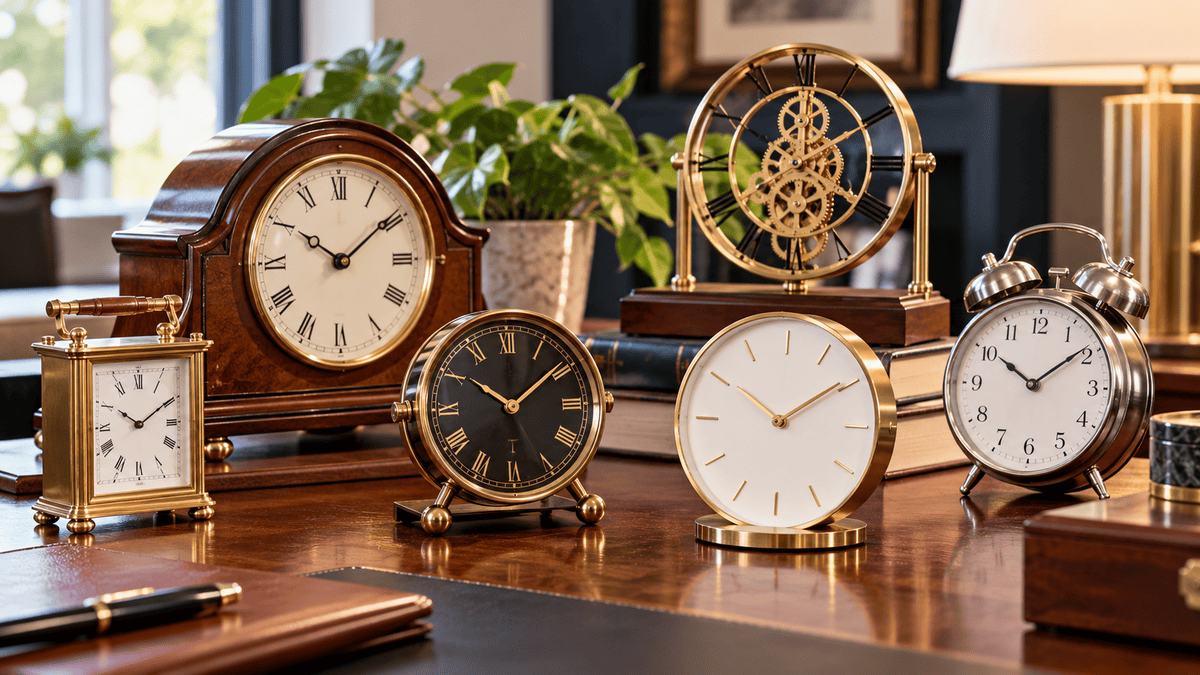
Architectural character matters as much as personal taste. A historic Chicago bungalow with original woodwork and warm amber walls calls for a different timepiece than a modern downtown condo with exposed concrete and steel fixtures. In traditional and transitional rooms, warm wood cases in oak, cherry, or mahogany read as intentional and grounded. In modern and industrial spaces, brushed aluminum, matte black, or minimalist white dials with clean Arabic numerals tend to integrate more naturally without competing with the room's existing geometry. Forcing a heavily ornamented traditional timepiece into a spare, contemporary space creates a visual argument the room never asked for.
Gallery walls present a specific challenge. When a timepiece shares wall space with framed artwork or mirrors, its visual weight needs calibration against the surrounding pieces. A heavily ornamented traditional timepiece can dominate a gallery arrangement and pull focus in a way that disrupts the composition; a simpler dial with a strong case profile tends to anchor the grouping without overpowering it. Conversely, in a room where the timepiece is the sole wall feature, a more elaborate design has room to breathe and can carry the visual interest the space needs. Give it space.
Color temperature is an underappreciated factor in timepiece selection. The finish of a timepiece case, whether it reads warm (honey oak, antique brass, walnut) or cool (silver, ebony, matte black), should echo the dominant tones in the room's furniture and textiles. A warm-toned room with a cool-finished timepiece creates a subtle but persistent visual friction that is difficult to articulate but easy to feel once you notice it. This is the kind of detail that separates a timepiece that looks right from one that merely looks fine.
To explore the full range of options, visit our curated online collection of modern wall timepieces for sale.
Key Features to Look for in a Mid-Range Wall Clock
When evaluating specific models, four construction details separate genuinely well-made timepieces from those that merely look the part at first glance. Look closely.
- Case Construction: Solid wood, brushed aluminum, or high-grade steel outlasts molded plastic in every measurable way: dimensional stability, finish durability, and the way the piece ages over decades of household use. A case that flexes slightly when handled is a reliable indicator of inferior material, regardless of how it photographs.
- Dial Cover: Real glass or mineral crystal resists scratching, does not yellow under UV exposure, and cleans without leaving the micro-abrasions that accumulate on acrylic surfaces over time. This is one of the clearest markers of a timepiece built to last.
- Movement Origin: Heartbeats from established manufacturers like Seiko, Rhythm, or UTS carry a documented track record of accuracy and serviceability. A reputable heartbeat is also one that can be replaced or serviced rather than requiring the entire timepiece to be discarded when something fails.
- Battery Compartment: Standard AA or C batteries should be accessible without tools. A battery compartment that requires disassembly discourages the annual replacement that prevents acid leaks from corroding the heartbeat; a corroded heartbeat is rarely worth restoring.
Maintenance for quartz and atomic timepieces is manageable but worth doing on a consistent schedule. Replacing batteries annually, even before they are visibly depleted, is the single most effective way to prevent the acid leakage that corrodes battery terminals and ruins heartbeats. Cleaning glass crystals with a soft, lint-free cloth and a mild glass cleaner preserves optical clarity without scratching; wood cases respond well to occasional application of a furniture-appropriate polish, avoiding anything with silicone or harsh solvents that can lift the finish over time. These are not demanding tasks, but skipping them consistently is how a $250 timepiece becomes a $250 problem.
When a timepiece does need professional attention, the difference between a heritage brand and a mass-market piece becomes apparent. High-quality heartbeats from Howard Miller, Bulova, and Seiko are designed with serviceability in mind; a stopped timepiece from one of these brands is a worthy candidate for restoration, not a candidate for the trash. Chicago Clock Company's master horologists, Jason Matthiesen, Louie Matthiesen, and Conrad Utecht, provide complete preservation and restoration services for timepieces of all ages and complexity, treating every timepiece with the trusted hands and gentle care it deserves. We also back our collection with a flexible exchange policy (specific terms available directly from our master horologists) to give you confidence in your purchase.
Frequently Asked Questions About Wall Clocks
Which is the best day to buy a wall timepiece?
Major seasonal home decor events and holiday sales, including Black Friday, Cyber Monday, and end-of-season clearance periods, typically offer the deepest discounts on wall timepieces. At Chicago Clock Company, we maintain honest, fair pricing year-round, backed by our multi-generational commitment to quality and service, so you will not find artificially inflated prices that only look favorable during a promotional window.
What are the primary safety classifications for household timepieces?
Federal product safety guidelines classify household timepieces under two main categories: "Clocks, electric or battery operated" (code 4065) and "Clocks, not electric or battery operated or not specified" (code 4067), as detailed in the CPSC NEISS Coding Manual. Both categories are monitored under the broader "Home Furnishings and Fixtures" product group for consumer safety tracking, as outlined in the CPSC FY23 Annual Report.
How do you properly wind a mechanical wall timepiece without damaging the spring?
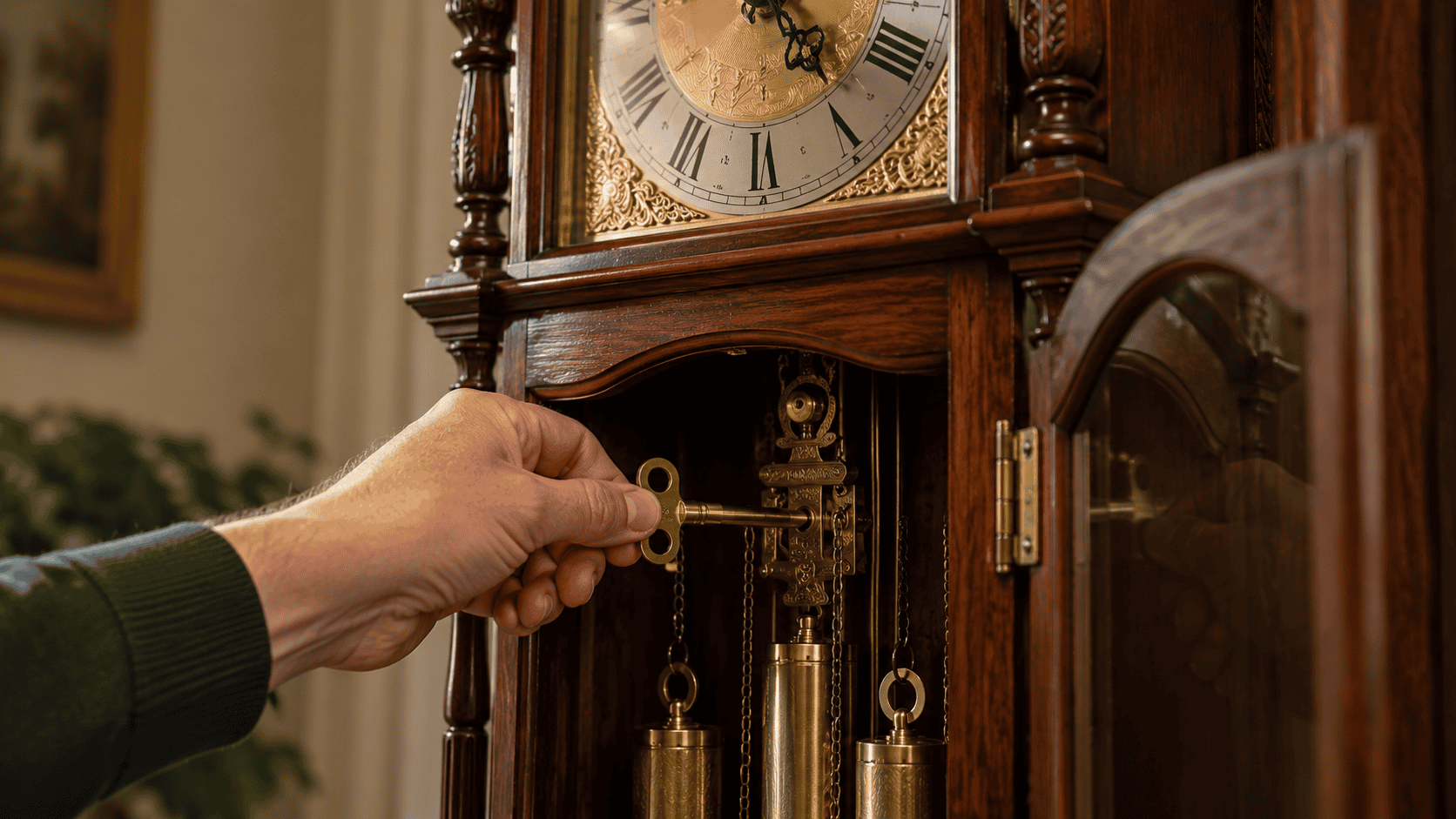
Insert the winding key fully into the arbor and turn it with consistent, steady pressure. Wind until you feel a distinct resistance. That resistance is the mainspring reaching its limit, and forcing it past that point risks damage that is expensive to restore. If you are working with an unfamiliar heartbeat or have not wound a mechanical timepiece before, our master horologists are available to walk you through the process.
Can a wall timepiece under $300 be preserved or restored if it stops working?
Yes, and this is one of the clearest practical advantages of buying from a heritage brand rather than a mass-market manufacturer. Howard Miller, Bulova, and Seiko build their heartbeats with serviceability in mind: a stopped timepiece from one of these brands is far more likely to be a viable candidate for heartbeat replacement or case restoration than a piece that was designed to be discarded. Choosing restoration over replacement also preserves the aesthetic and sentimental value of a timepiece that has become part of your home's daily rhythm.
What is the average lifespan of a modern quartz wall timepiece heartbeat?
A high-quality quartz heartbeat from a reputable manufacturer can last 10 to 20 years with proper care. Annual battery replacement and keeping the clock away from high-humidity environments and direct heat sources are the two most impactful habits for extending heartbeat life. The heartbeats most likely to fail prematurely are those that sat with depleted batteries long enough for acid to leach into the terminal contacts; a problem that annual replacement prevents almost entirely.
Come See Us Today
Choosing a wall timepiece is a more considered decision than most people expect before they start looking. The range of options under $300 is wide enough that the wrong choice is genuinely easy to make, and the right choice, once you understand what separates a well-made piece from a well-marketed one, is satisfying to live with for years. Whether you are drawn to the quiet precision of a Seiko silent sweep, the traditional warmth of a Bulova wooden case, or the melodic character of a Rhythm chiming timepiece, the quality available at this investment tier is real and durable. We can help.
Visit one of our Chicagoland showrooms in Clarendon Hills, Palatine, or Orland Park to experience the collection firsthand.