Are Grandfather Clocks Worth Anything? A Chicago Appraisal Guide
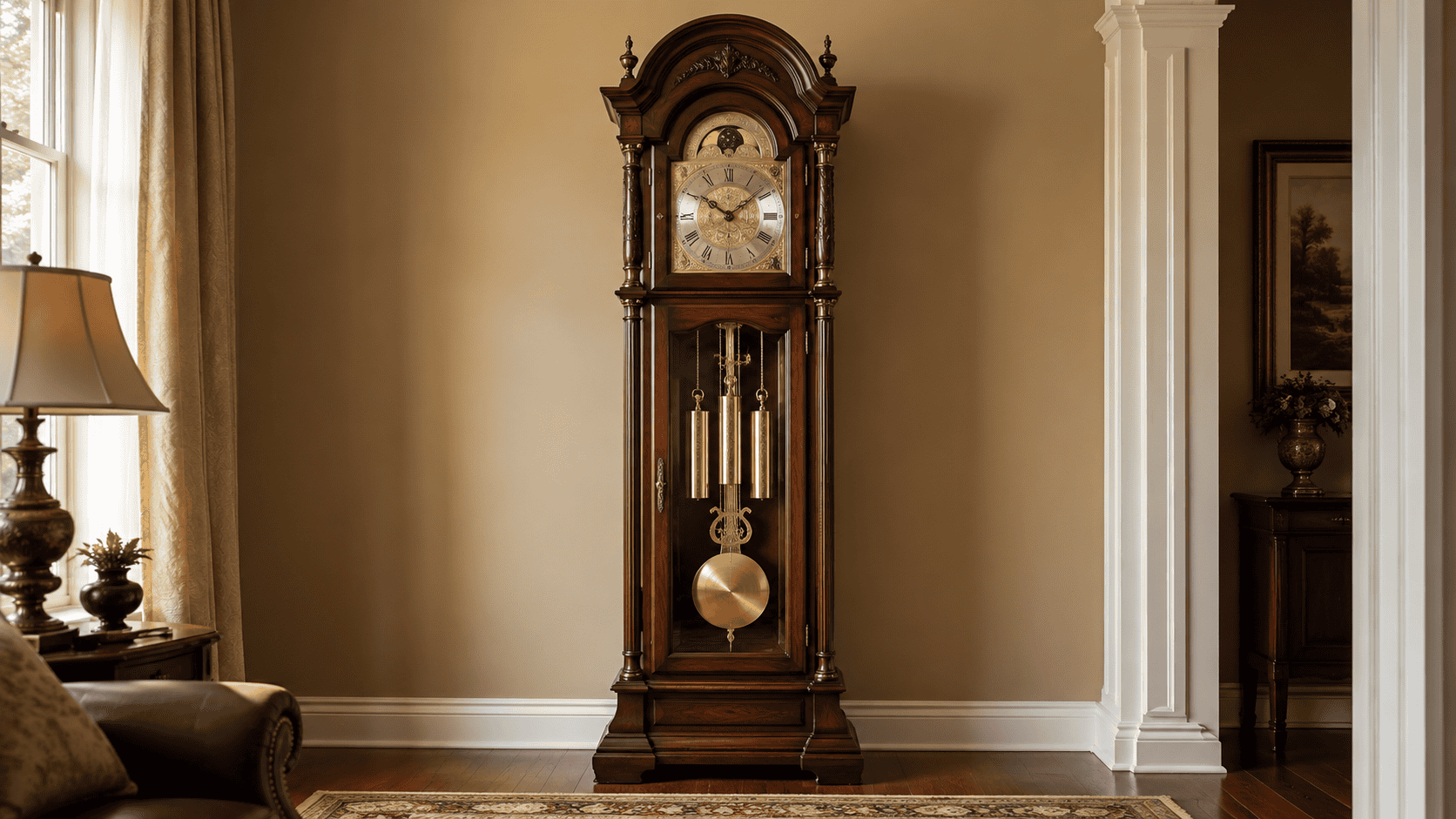
If you have inherited an old timepiece or are considering selling one, you may be wondering, are grandfather clocks worth anything? The answer is yes, many grandfather clocks have monetary, historical, decorative, or sentimental value. However, their market value can vary considerably. Some clocks may sell for only a few hundred dollars, while rare antique examples from respected makers can be worth thousands. The clock’s manufacturer, age, condition, movement, materials, provenance, and local demand all play an important role in determining its value.
For Chicago-area owners, evaluating a grandfather clock can be especially complicated. These clocks are large, delicate mechanical objects, so transportation, inspection, repair, and restoration costs must be considered alongside the potential selling price. A professional evaluation can help you understand what you own and decide whether selling, repairing, restoring, or keeping the clock makes the most sense.
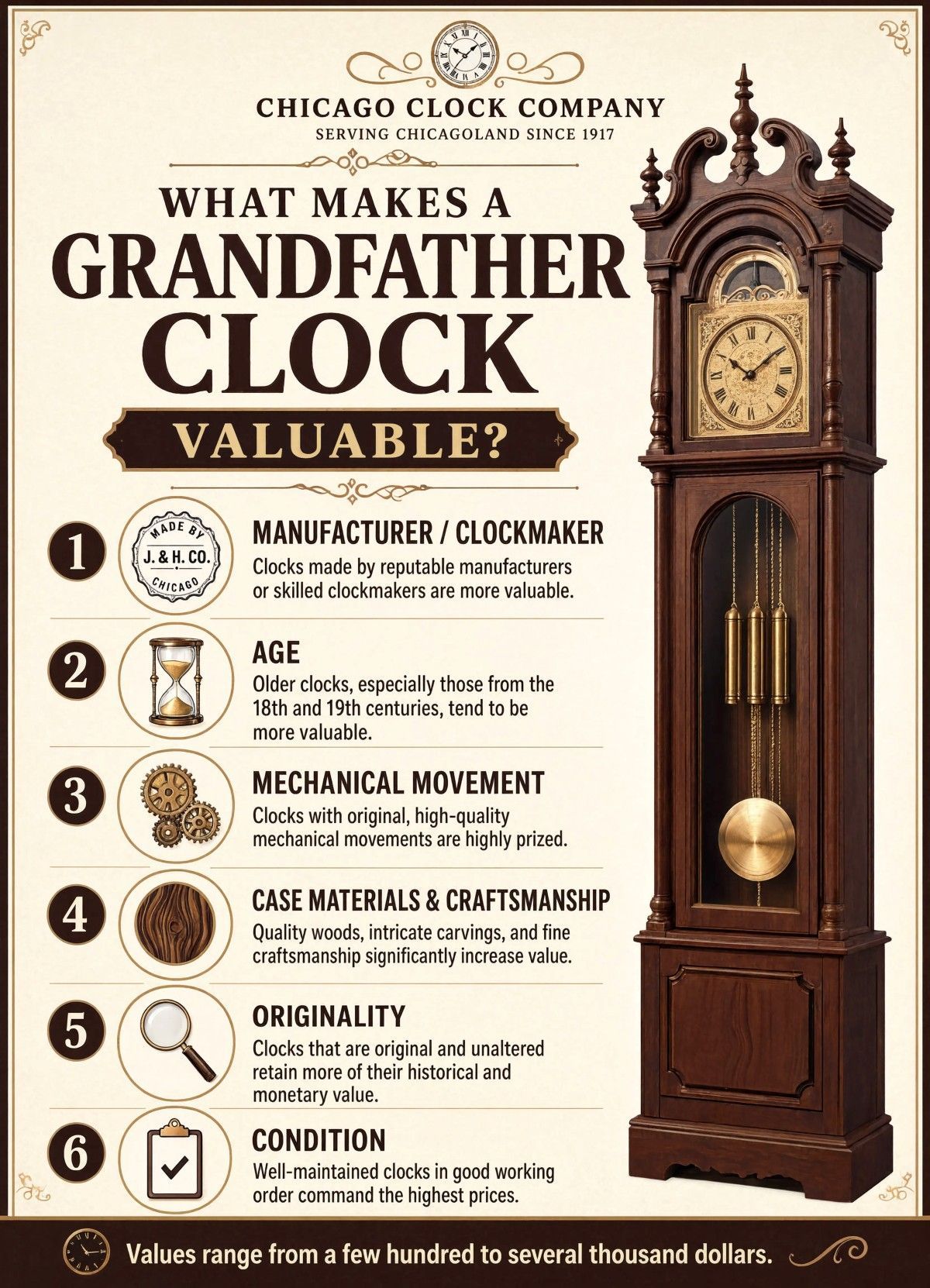
What Makes a Grandfather Clock Valuable?
A grandfather clock’s size and appearance alone do not determine its value. Two clocks that look similar from across a room may have dramatically different histories, movements, materials, and market prices. Appraisers and clock specialists generally consider several factors.
Manufacturer or Clockmaker
The maker is often one of the first details evaluated. Clocks produced by well-known manufacturers, respected cabinetmakers, or historically significant clockmakers may attract more interest from collectors.
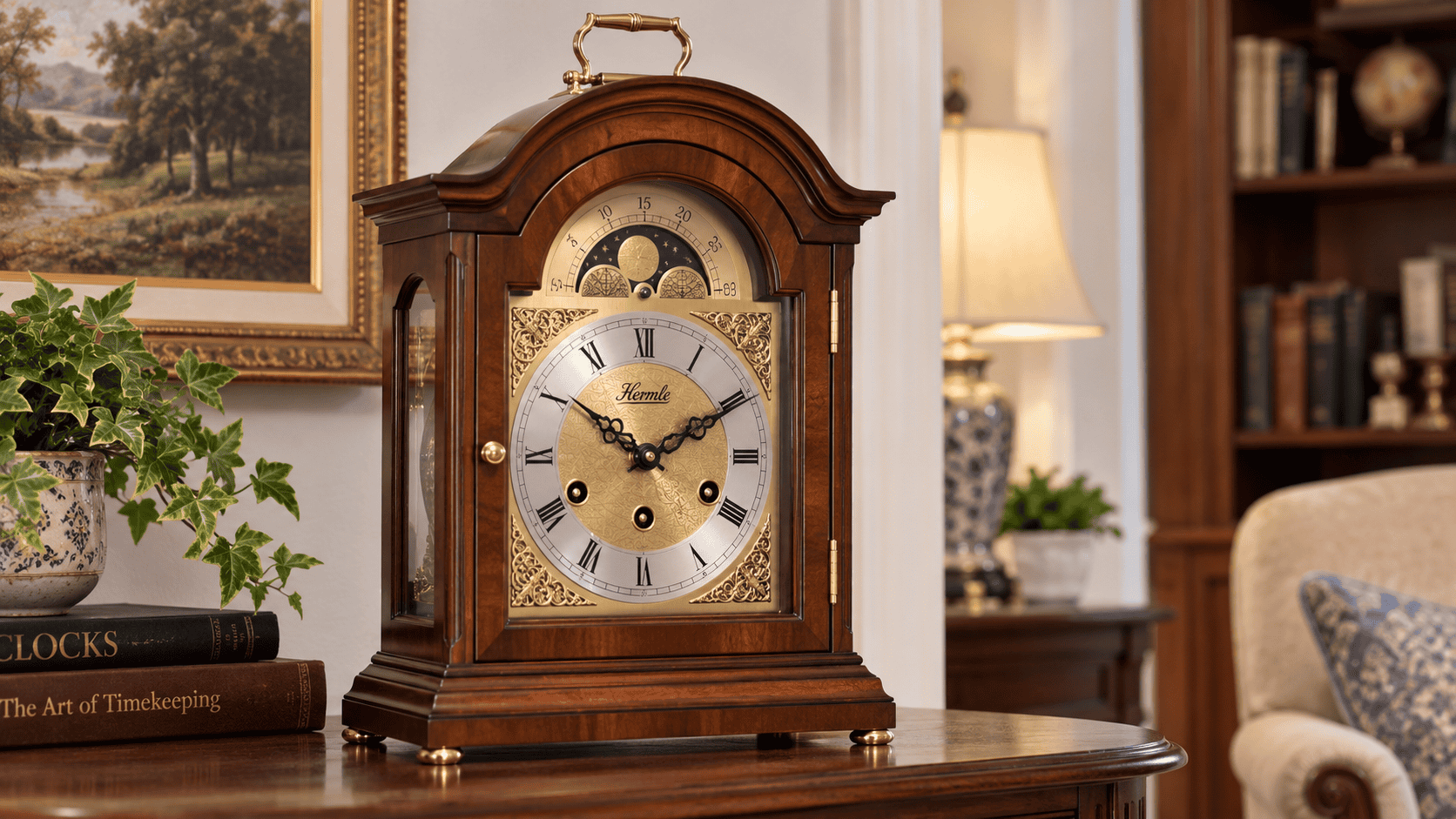
Look for identifying marks in places such as:
- The clock face or dial
- The back plate of the movement
- A label inside the case
- The pendulum
- The weights
- The inside of the hood or door
- Original paperwork or purchase receipts
A familiar brand name does not automatically make a clock highly valuable, but it can make identification easier and provide important information about age, construction, replacement parts, and market demand.
Age
Age can contribute to value, but an older clock is not always worth more than a newer one. A rare, well-preserved antique may be highly desirable, while an older mass-produced clock in poor condition may have limited resale value.
The term “antique” is sometimes used casually in listings, so owners should avoid assuming that a clock is antique simply because it belonged to a grandparent. Many grandfather clocks found in Chicago homes were manufactured during the second half of the 20th century. These clocks may still be attractive and well-made, but they typically occupy a different market category than clocks produced in the 1700s or 1800s.
Mechanical Movement
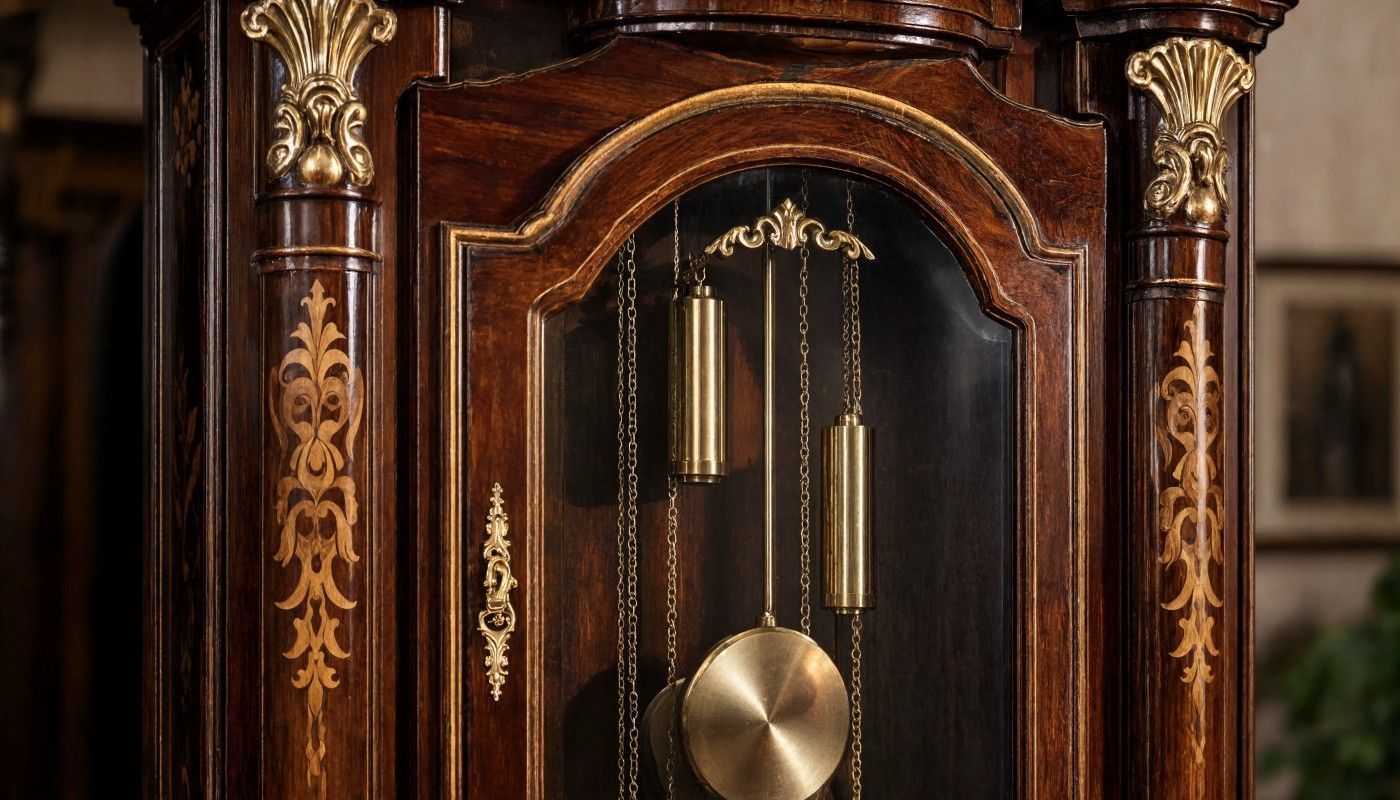
The movement is the internal mechanism that powers the clock, controls timekeeping, and operates its chimes. Its manufacturer, complexity, originality, and condition can significantly affect value.
Important movement features may include:
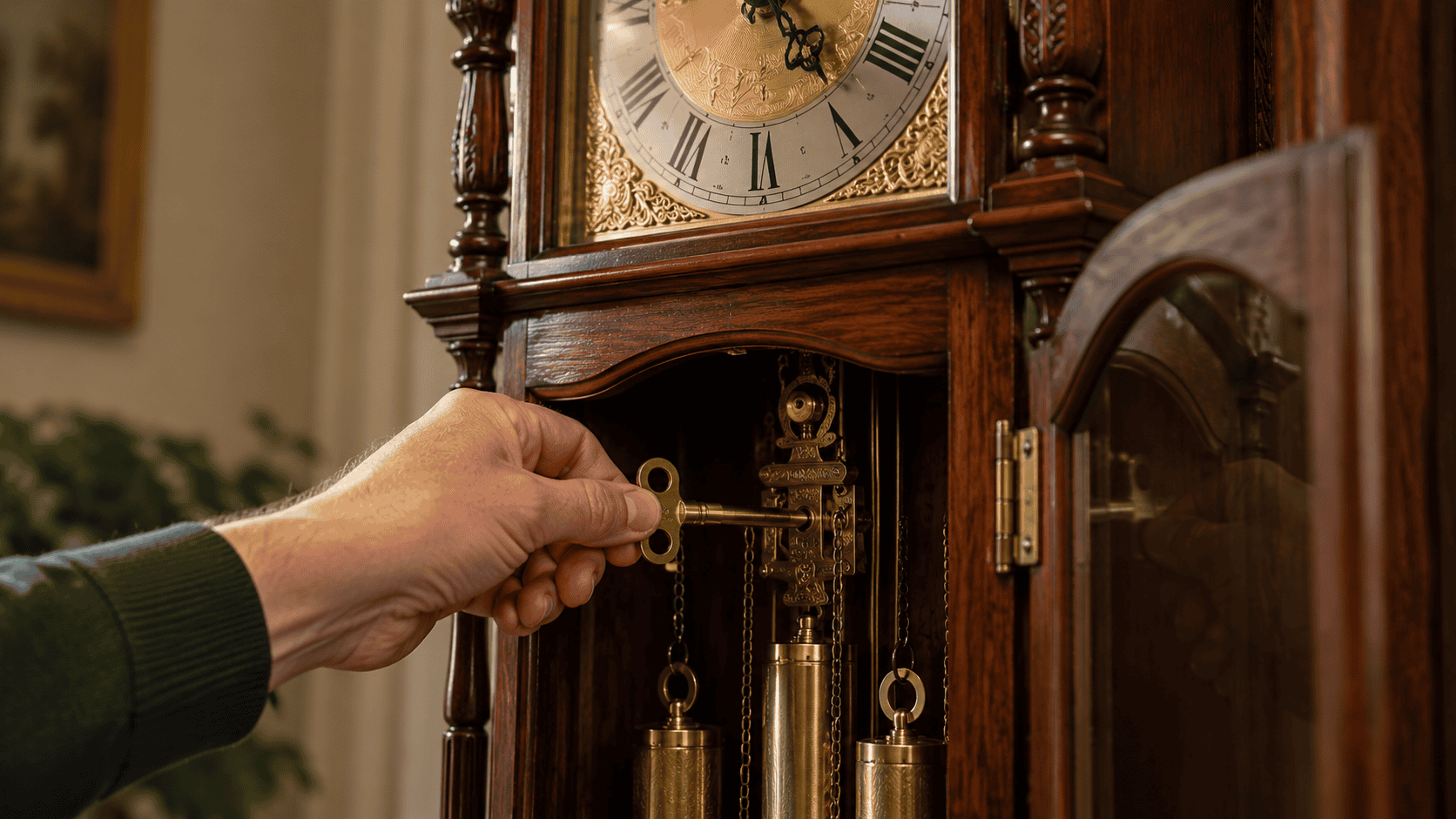
- Cable-driven or chain-driven construction
- Eight-day or longer-running mechanisms
- Moon phase dials
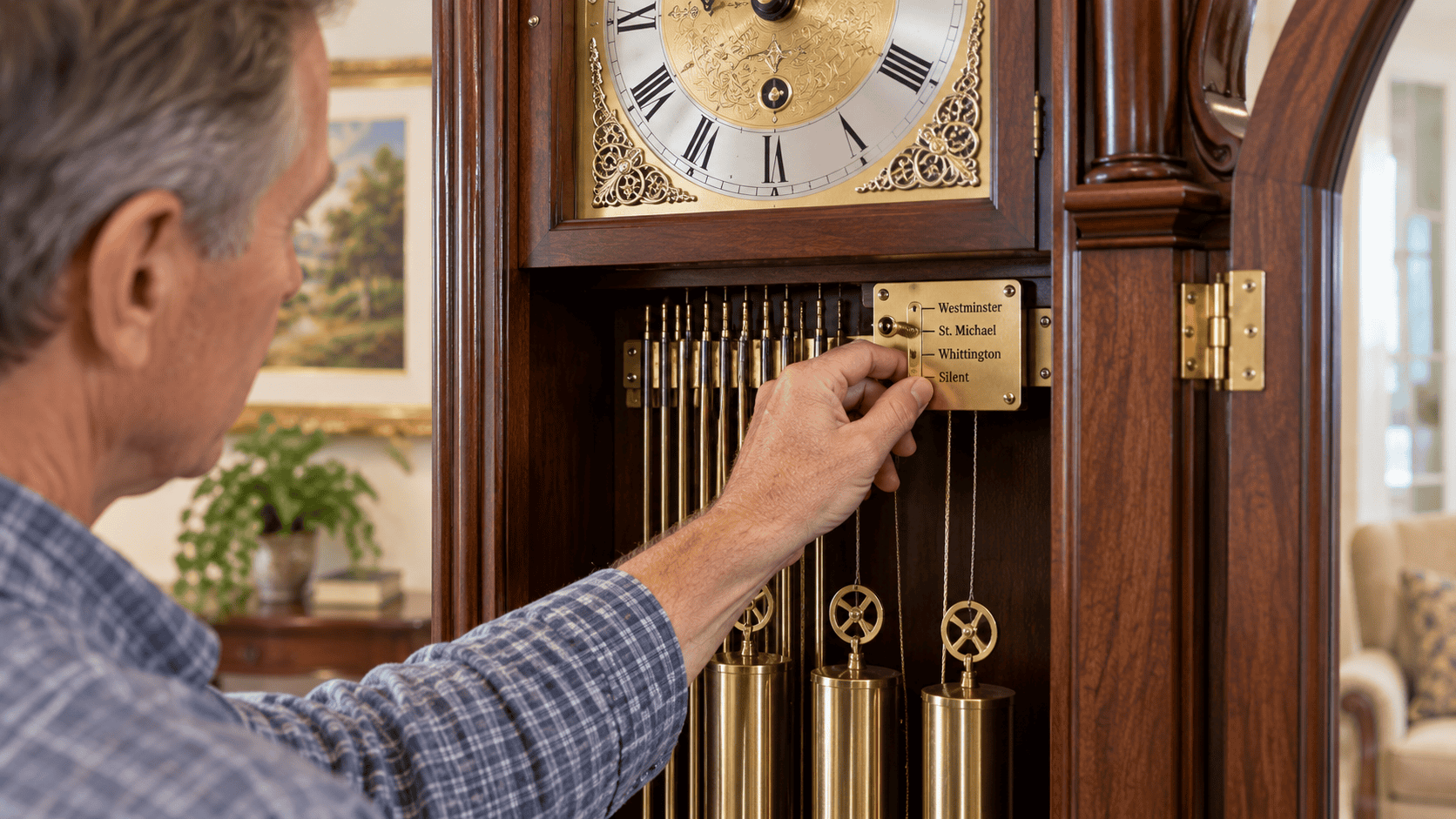
- Multiple chime selections
- Musical movements
- Calendar functions
- Tubular bells
- Original hand-built components
A clock that runs briefly is not necessarily in good mechanical condition. Dried lubricants, worn bushings, damaged gears, incorrect adjustments, or previous repair attempts can cause problems that are not immediately visible.
Case Materials and Craftsmanship
The case is another major part of the evaluation. High-quality hardwoods, detailed carving, hand-cut veneers, inlays, beveled glass, brass ornamentation, and carefully constructed cabinetry may increase a clock’s appeal.
Common woods include:
- Oak
- Walnut
- Cherry
- Mahogany
- Maple
- Pine
- Mixed hardwoods with veneers
An appraiser will look at both the quality of the materials and the quality of the workmanship. A solid wood case is not automatically more valuable than a veneered case, particularly when the veneer is historically appropriate or exceptionally well executed.
Originality
Collectors often place a premium on originality. A clock with its original movement, dial, hands, weights, pendulum, case, glass, and decorative elements may be more desirable than one assembled from unrelated parts.
That does not mean every repair reduces value. Proper maintenance is essential for preserving a mechanical clock. The concern is whether major parts have been replaced, altered, refinished, or repaired in a way that changes the clock’s historical integrity.
Condition
Condition can dramatically influence both appraisal value and resale potential. A clock may appear beautiful while still requiring extensive mechanical work. Conversely, a clock with a worn exterior may contain a valuable and historically significant movement.
A condition assessment may consider:
- Whether the movement operates correctly
- Whether the clock keeps accurate time
- Whether all chimes function
- Whether the case is structurally stable
- Whether the finish is original
- Whether decorative pieces are missing
- Whether the dial has been repainted
- Whether the weights and pendulum are correct
- Whether the movement shows rust or excessive wear
- Whether previous repairs were completed properly
Environmental damage can also matter. Prolonged exposure to humidity, direct sunlight, smoke, water, or extreme temperature changes can affect the movement, wood, finish, adhesives, dial, and metal components.
How Much Is a Grandfather Clock Worth?
There is no single standard price for a grandfather clock. Values can range from modest decorative or parts value to substantial collector value.
A typical modern or vintage clock from a recognized manufacturer may be worth several hundred dollars, depending on its model, condition, location, and demand. Higher-quality clocks with desirable movements, cabinetry, or special features may sell for more. Rare antique clocks with documented origins and respected makers may reach significantly higher values.
However, an appraisal should not be based on online asking prices alone. A seller may list a clock at any price, but that does not mean a buyer will pay it. Completed sales, regional demand, condition, originality, and transportation requirements provide more useful information.
Why Grandfather Clock Resale Values Can Be Surprising
Owners are sometimes surprised that a large, impressive clock does not automatically command a high selling price. The secondary market for grandfather clocks is affected by several practical considerations.
Transportation Is Difficult
Grandfather clocks must be prepared and moved carefully. The pendulum and weights should be removed and secured, moving components should be protected, and the cabinet should remain stable during transportation. Improper handling can damage the suspension spring, pendulum leader, chime rods, movement, glass, or case.
The cost and difficulty of moving a clock can reduce the number of potential buyers, particularly when a professional mover or clock technician is needed.
Large Clocks Require Space
Many contemporary homes have open floor plans, lower ceilings, or limited wall space. Even buyers who appreciate traditional clocks may not have a suitable location for a tall case clock.
Repairs Can Affect the Purchase Decision
A buyer may hesitate to purchase a nonworking clock without knowing what repairs will cost. A professional inspection can reduce uncertainty by documenting the clock’s condition and identifying its service needs.
Regional Demand Matters
A clock’s value may vary by location. A model that is difficult to sell in one area may attract stronger interest elsewhere. Chicago’s large population, historic neighborhoods, antique market, and regional network of collectors can create opportunities, but local demand still changes over time.
Is It Worth Repairing a Grandfather Clock?
The answer depends on the clock, the repair requirements, and your goals.
Repair may be worthwhile when:
- The clock has strong sentimental or family value
- It was produced by a desirable maker
- The movement and case are largely original
- The cabinet is in good structural condition
- The repair will preserve a family heirloom
- The clock is expected to remain in regular use
- The cost is reasonable compared with replacement
Repair may be less practical when the movement is severely damaged, essential parts are unavailable, the cabinet has extensive structural problems, or the owner’s only goal is immediate resale.
It is also important to distinguish repair from restoration. Repair focuses on returning the clock to reliable operation. Restoration may involve more extensive mechanical, cosmetic, or cabinet work. A historically important clock should be evaluated carefully before refinishing, repainting, polishing, or replacing original components.
Chicago Clock Company notes that mechanical timepieces benefit from appropriate cleaning and lubrication for reliable operation. We offer in-home grandfather clock services, which can help owners avoid unnecessary transportation of delicate clocks.
How to Identify Your Grandfather Clock
Before requesting an appraisal or evaluation, gather as much information as possible without taking the movement apart.
Start by documenting:
- The full front, back, and sides of the clock
- The dial and hands
- The interior of the case
- The movement and any visible markings
- The pendulum and weights
- Labels, serial numbers, signatures, or stamps
- Decorative details
- Damaged or missing parts
- Original receipts, manuals, or certificates
Measure the clock’s height, width, and depth. Note whether it runs, keeps time, and chimes properly. Be accurate about its condition. A specialist needs to know whether the clock stops, runs slowly, chimes at the wrong time, or has remained unused for many years. Do not force the hands, pull the chains, spray lubricant into the movement, or test unfamiliar controls. Household oils and aerosol products can attract dust or contaminate a movement, potentially making professional cleaning more difficult.
Appraisal Value Versus Selling Price
Owners should understand that a clock can have several different values.
Fair Market Value
Fair market value estimates what a knowledgeable buyer might reasonably pay a knowledgeable seller under normal conditions.
Insurance Replacement Value
Insurance value may represent the cost of replacing a clock with a comparable example through a dealer or specialized market. This figure may be higher than fair market value.
Auction Value
Auction value estimates what the clock might bring in a competitive sale. The final result can vary based on the auction house, audience, presentation, timing, and buyer interest.
Dealer or Reseller Value
A dealer typically needs room for transportation, inspection, repairs, storage, marketing, and profit. A dealer’s purchase offer may therefore be lower than the price at which the clock is eventually listed.
Sentimental Value
A family clock may be worth far more emotionally than financially. Sentimental value is personal and cannot be measured through comparable sales. For many families, repairing an inherited clock is worthwhile even when the repair cost exceeds its likely resale price.
Should You Sell, Restore, or Keep the Clock?
The best decision depends on your priorities. Consider selling when the clock does not fit your home, has no meaningful family connection, or could be appreciated by another collector.
Consider repairing or restoring when the clock has historical importance, strong sentimental value, quality craftsmanship, or the potential for long-term use. Consider keeping it in its present condition when alterations could reduce originality or when you are not yet certain about its history. Obtaining a professional assessment before making permanent cosmetic changes can prevent avoidable mistakes.
Frequently Asked Questions
Are grandfather clocks worth anything today?
Yes. Many grandfather clocks have resale, decorative, historical, or sentimental value. The amount depends on the maker, age, condition, movement, materials, originality, and demand.
How can I find the maker of my grandfather clock?
Check the dial, movement, inside labels, serial numbers, back plate, pendulum, weights, and original documents. Clear photographs can help a professional identify the manufacturer.
Does a grandfather clock have to work to be valuable?
No. A rare or historically important clock may retain value even when it does not run. However, mechanical problems can reduce the selling price because buyers must account for repair costs.
Are Howard Miller grandfather clocks valuable?
Some Howard Miller clocks have meaningful resale value, particularly desirable models in excellent condition. Value depends on the specific model, age, movement, features, condition, and local demand.
Does refinishing a grandfather clock reduce its value?
It can. Refinishing may reduce collector interest when it removes an original historic surface. Before altering an antique or unusual clock, consult a qualified professional.
Can I move a grandfather clock myself?
It is possible, but improper preparation can cause serious damage. The weights and pendulum should be removed, the movement should be protected, and the case should be transported securely. Professional assistance is often the safer option.
How often should a grandfather clock be serviced?
Service needs depend on the movement, environment, usage, and previous maintenance. A clock specialist can inspect the movement and recommend an appropriate maintenance schedule.
Is an online appraisal enough?
Photos can provide a preliminary opinion, but an in-person inspection may be needed to evaluate the movement, originality, hidden damage, previous repairs, and overall condition accurately.
Should I repair a clock before selling it?
Not always. Obtain a professional estimate first. In some cases, documented maintenance improves buyer confidence. In others, repair costs may exceed the likely increase in selling price.
What information should I provide for an appraisal?
Provide clear photos, dimensions, visible maker’s marks, serial numbers, ownership history, repair records, and an honest description of how the clock operates.
Get Professional Grandfather Clock Help in Chicago
Determining whether a grandfather clock is valuable requires more than checking its age or comparing it with online listings. A knowledgeable clock professional can examine the movement, identify the manufacturer, assess the case and components, evaluate mechanical problems, and explain your repair or maintenance options.
We have served the Chicagoland timepiece community since 1917 and provide clock sales, repair, setup, maintenance, and in-home grandfather clock services. We also offer factory-authorized service for various fine clock brands.
Whether you have inherited a family heirloom, discovered a clock during an estate cleanout, or want to restore a timepiece that has stopped running, contact us to discuss your grandfather clock. Our experienced team can help you better understand its condition, care requirements, and next steps.